
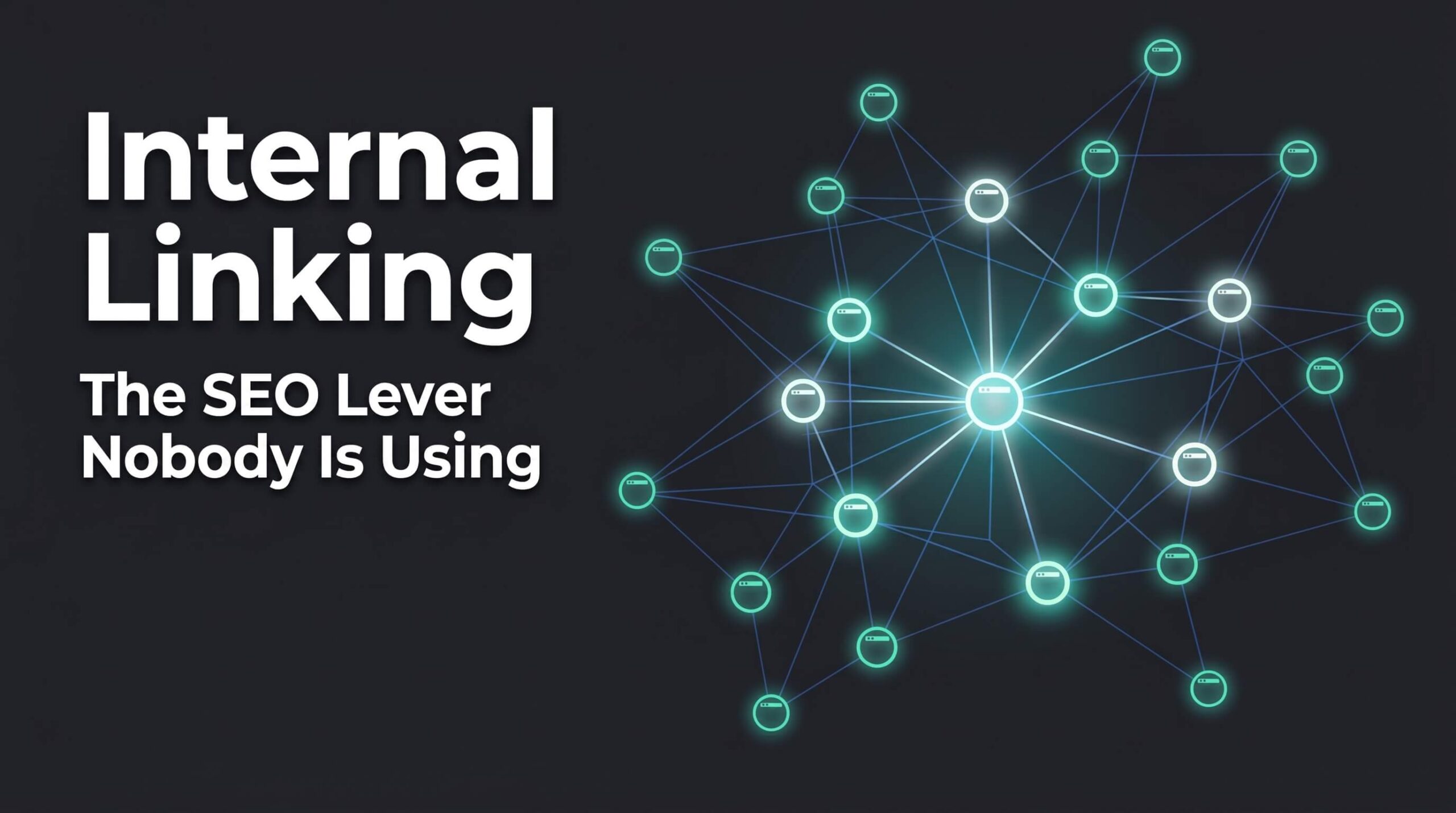
Internal linking is the SEO tactic most bloggers set up once and forget. Here’s why it’s quietly one of the most powerful ranking levers you’re not using.
Every blogger knows about backlinks. Everyone’s chasing them, trading for them, writing guest posts for them. Meanwhile, one of the most effective ways to move rankings is sitting right inside their own site, completely untouched.
Internal linking. Not glamorous. Not the kind of thing that gets talked about in YouTube SEO videos with dramatic thumbnails. But consistently, across competitive niches and every kind of site, internal linking is the difference between content that ranks and content that stagnates. Most bloggers treat it as an afterthought. The ones quietly dominating their niches treat it like architecture.
What Internal Linking Actually Does (Beyond the Surface Explanation)
The standard explanation goes like this: internal links help Google crawl your site. That’s true but incomplete, and stopping there is exactly why most people underestimate this tactic.
Internal links do three things simultaneously. They help search engines discover and index pages. They pass authority, what SEOs call “link equity” or “PageRank”, from one page to another within your site. And they signal to Google which pages matter most to you, based on how frequently and prominently you link to them.
That third function is where the real leverage is. Google interprets your internal link structure as a vote. When you link to a specific page repeatedly from high-traffic, authoritative pages on your site, you’re telling Google that this page deserves attention. You’re concentrating authority toward it. Done deliberately, this can meaningfully shift rankings for pages that have been stuck for months.
Most bloggers never think about this intentionally. They add a related post link at the bottom of an article and call it done. That’s not a strategy. That’s decoration.
The Pillar and Cluster Model Is Not Just Theory
If you’ve spent any time in SEO circles, you’ve heard about topic clusters. A pillar page covers a broad topic comprehensively. Cluster pages cover specific sub-topics in depth. Internal links connect them in a deliberate web that tells Google, clearly, what this section of your site is about and how the pieces relate.
This model works because it mirrors how Google thinks about topical authority. A site with a strong pillar page on, say, “email marketing” linked to fifteen supporting articles about subject lines, list segmentation, automation workflows, and deliverability is telling a coherent story. Google can understand the topical depth. It can see the architecture. And it rewards it.
Compare that to a blog where 80 articles exist in structural isolation, barely linked to each other, no hierarchy, no deliberate flow of authority. Google can crawl all of them, but it can’t determine what the site is really an authority on because nothing is connected in a meaningful way.
The pillar-cluster model isn’t complicated to implement. It just requires thinking about your content as a system rather than a collection of individual posts.
Anchor Text Still Matters and Most People Get It Wrong
When you add an internal link, what you link on is as important as where you link to. Anchor text, the clickable words in a hyperlink, is a relevance signal. It tells search engines what the destination page is about.
Generic anchor text like “click here,” “read more,” or “this article” is wasted opportunity. It passes authority but no topical context. Descriptive, keyword-relevant anchor text, where appropriate and natural, does both.
The caveat is important: natural and appropriate. Forcing exact-match anchor text into every internal link looks manipulative and reads awkwardly to real visitors. The goal is to use descriptive anchors that make sense in context and happen to contain relevant terms. Most of the time, that’s not hard. It just requires being intentional when you write and when you go back and update older content.
There’s also the matter of variety. Linking to the same page from multiple posts with slightly different but relevant anchor text is a reasonable practice. It builds a natural footprint of contextual signals pointing to that page.
Your High-Traffic Pages Are Sitting on Untapped Authority
Here’s a tactic that gets results faster than most people expect. Look at Google Search Console and find the pages on your site that get the most traffic or have the most backlinks pointing to them. These pages have accumulated real authority. Now look at how many internal links they have pointing outward to other pages on your site.
For most blogs, the answer is: not enough.
A high-traffic post from two years ago that gets 5,000 visits a month has genuine link equity. If that page is linking to three other articles on your site, it’s passing authority to three pages. If it’s linking to ten, it’s distributing that authority more broadly. Adding deliberate internal links from your strongest pages to your target pages, the ones you want to rank, is one of the fastest, simplest, and most underused ways to improve rankings without any external effort.
You already have the asset. You just haven’t used it.
The Orphan Page Problem Nobody Talks About
An orphan page is any page on your site with no internal links pointing to it. It exists. Google can technically find it. But in practice, pages with no internal links pointing to them are functionally invisible within your site’s ecosystem.
They get crawled less frequently. They accumulate no internal authority. They’re structurally disconnected from everything else, which means Google has little reason to prioritize them.
Run a crawl of your site using any basic SEO audit tool. Screaming Frog has a free version that works fine for this. Filter for pages with zero internal inlinks. The results are usually surprising. Most established blogs have a graveyard of orphan pages. Posts that were published, got a little traffic at launch, and then were never linked to from anything else. They just sit there, invisible.
Fix this. Connect them to relevant content. Make them part of the architecture. Some of those orphaned pages will start moving in search within weeks of getting proper internal links pointed at them.
Make It a Habit, Not a Retrofit Project
The biggest mistake bloggers make with internal linking is treating it as a one-time audit project rather than an ongoing practice. You do a big internal link cleanup, feel good about it, publish 20 more articles without linking them to anything, and end up back where you started six months later.
Every time you publish a new post, link to it from at least two or three existing articles that are topically relevant. Every time you publish, look for opportunities to link from the new post to older relevant content. Build it into the workflow. It takes five minutes per post and compounds over time in ways that most external tactics simply can’t.
No link outreach required. No waiting for someone else to give you something. The authority is already yours. The structure just needs to reflect that.
The Quiet Advantage
Internal linking won’t make your site explode overnight. Nothing in SEO does. But it’s one of the few tactics that improves with scale. The larger your site grows, the more powerful a deliberate internal linking structure becomes, because there’s more authority to redistribute, more topical signals to reinforce, and more architectural depth for Google to reward.
Most bloggers ignore it because it’s not exciting. That’s precisely why the ones who don’t ignore it keep winning in search while everyone else wonders why their content isn’t ranking.